
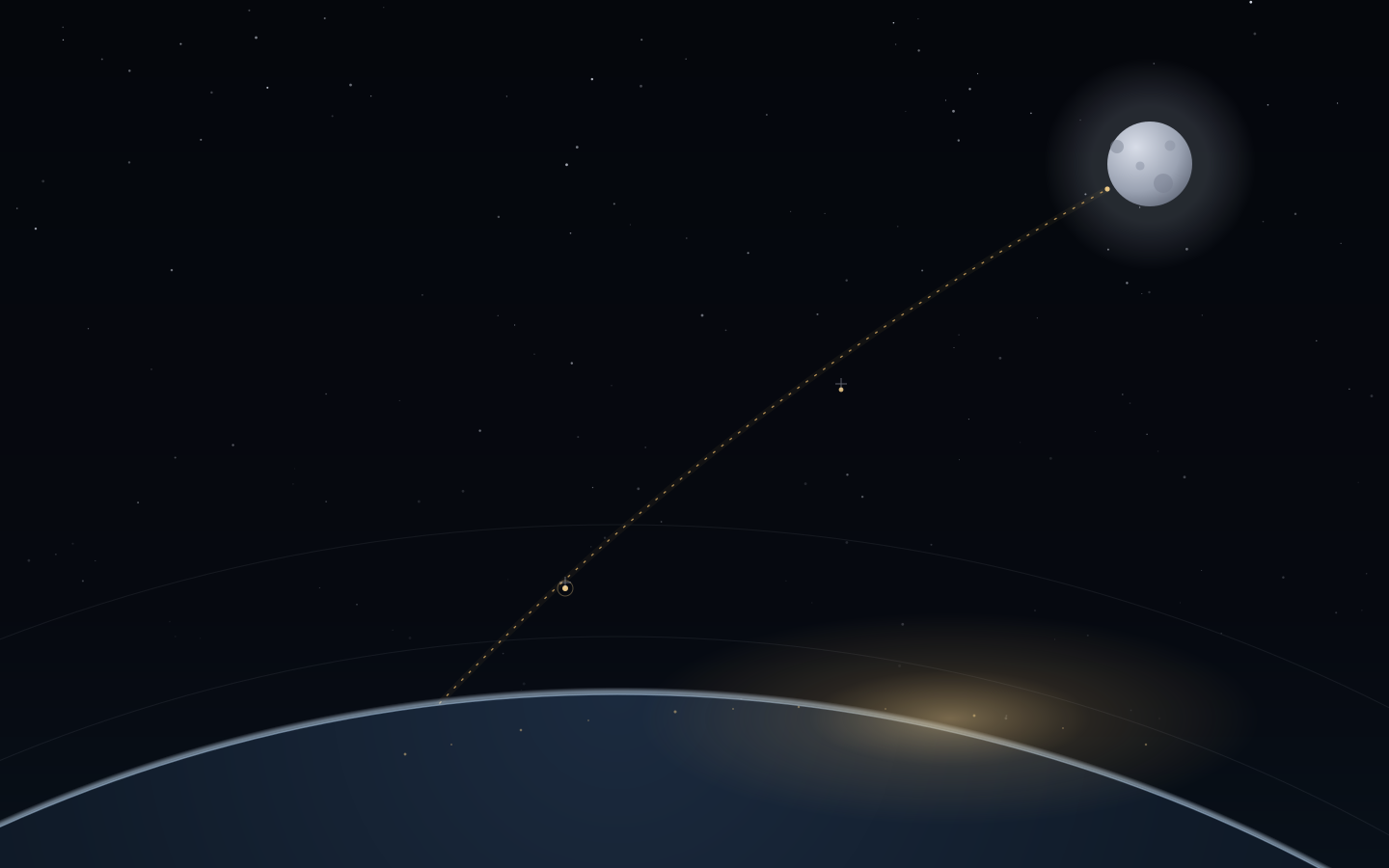
Deployment has outrun operations.
Annual satellite deployment has grown roughly ninefold since 2019. The systems for coordinating, maneuvering, and sustaining those fleets have not grown with them.
GenLab · Orbital Infrastructure
Launch gets you to orbit. Operating there requires four foundational capabilities — navigation, sensing, autonomy, and logistics. We invest in the companies building those rails.
GPS defined navigation. Cloud defined compute. Launch defined access to orbit. The companies that define control will own what comes next.
The GenLab thesis
01The Problem
The buildout is no longer speculative — it is contracted, funded, and accelerating. What hasn't kept pace is the infrastructure required to operate at that scale.
329
Orbital launches in 2025 — an all-time record
4,500+
Satellites deployed in 2025, up 54% year over year
13,000+
Active satellites on orbit entering 2026
$1.8T
Projected space economy by 2035
Sources: BryceTech · Jonathan's Space Report · McKinsey & Company
Annual satellite deployment has grown roughly ninefold since 2019. The systems for coordinating, maneuvering, and sustaining those fleets have not grown with them.
Resilience, maneuverability, and control in space are no longer research priorities — they are matters of national capability for the United States and its allies.
Launch costs fell more than 90% in a decade. Access is no longer the constraint. The hard problems — and the durable value — moved up the stack.
02The Thesis
Every operational system in orbit depends on the same foundational layers. They are the rails of the orbital economy — and they are where we invest. New to the terms? Start with our primer on orbital infrastructure.
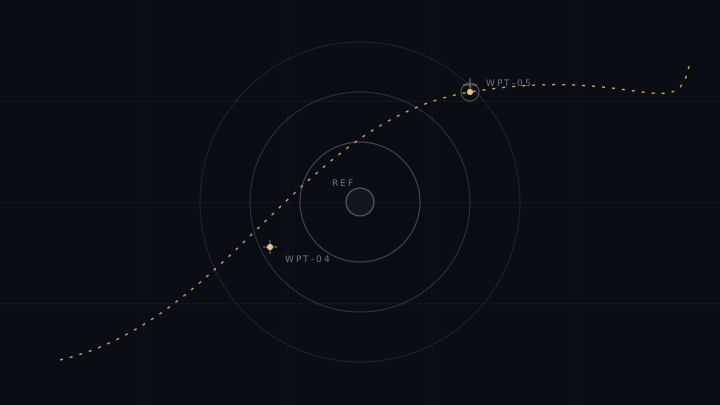
CAP / 01
Position, timing, and control in environments where GPS doesn't reach. The layer every other system in orbit depends on.
PNT · GPS-denied · Mission control
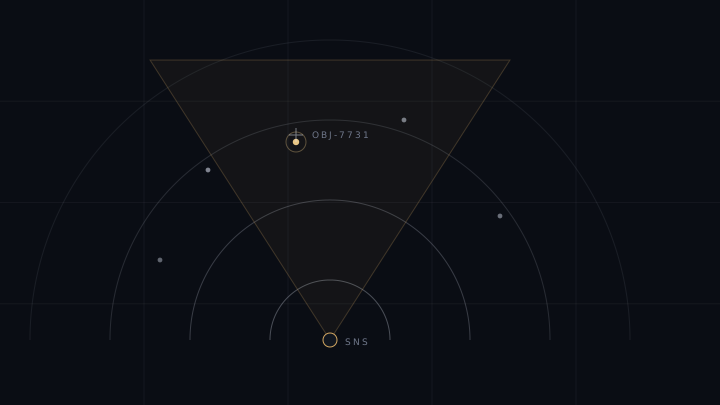
CAP / 02
Persistent awareness of what is happening in orbit and on Earth — perception, characterization, and intelligence at machine speed.
Perception · Domain awareness · Intelligence
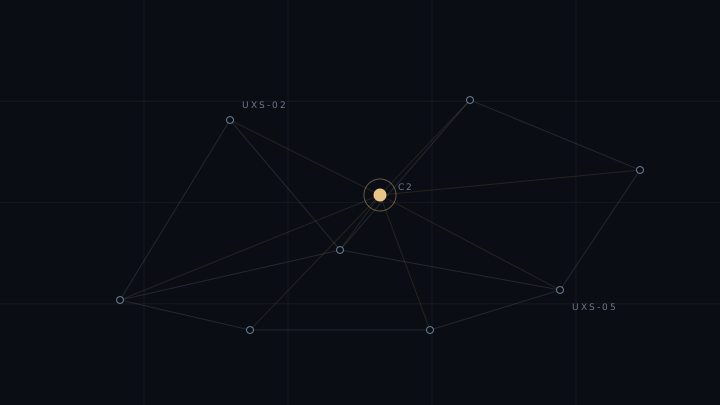
CAP / 03
Systems that route, coordinate, and defend themselves. Human direction, machine execution — because orbit doesn't wait for a ground station.
Edge compute · Command & control · Teaming
CAP / 04
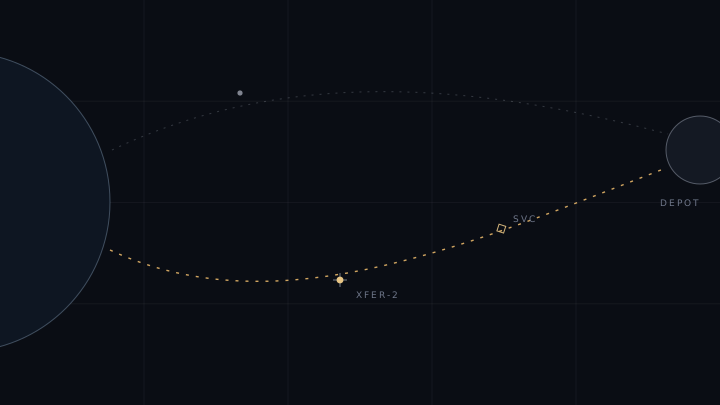
Movement, servicing, manufacturing, and the industrial supply chains that sustain operations in orbit — and the capital systems behind them.
Servicing · Manufacturing · Supply chain
03Posture
We are American investors aligned with U.S. space and defense priorities — and we work where our allies build, from Berlin to Tokyo to Brussels.
Our companies work inside American space and defense programs. We invest where national capability and commercial markets reinforce each other.
Every investment must serve both a government mission and a commercial market. Dual-use revenue is a requirement, not a bonus.
Space infrastructure is being built across the alliance. We maintain working relationships in Germany, Japan, the United Kingdom, and across NATO.
US
United States
DE
Germany
JP
Japan
UK
United Kingdom
NATO
Alliance Programs
04Portfolio
Companies across space, autonomy, intelligence, and the infrastructure beneath them.









05The Firm
GenLab is led by operators who have built infrastructure their entire careers — from the early web through the Department of Energy's national laboratories and NASA's programs. We have watched the same pattern repeat for thirty years: new technology deploys, infrastructure forms beneath it, and an industry matures.
Orbit is that pattern, happening again. We don't evaluate it from the outside — we work where it is being built.
06The Sim
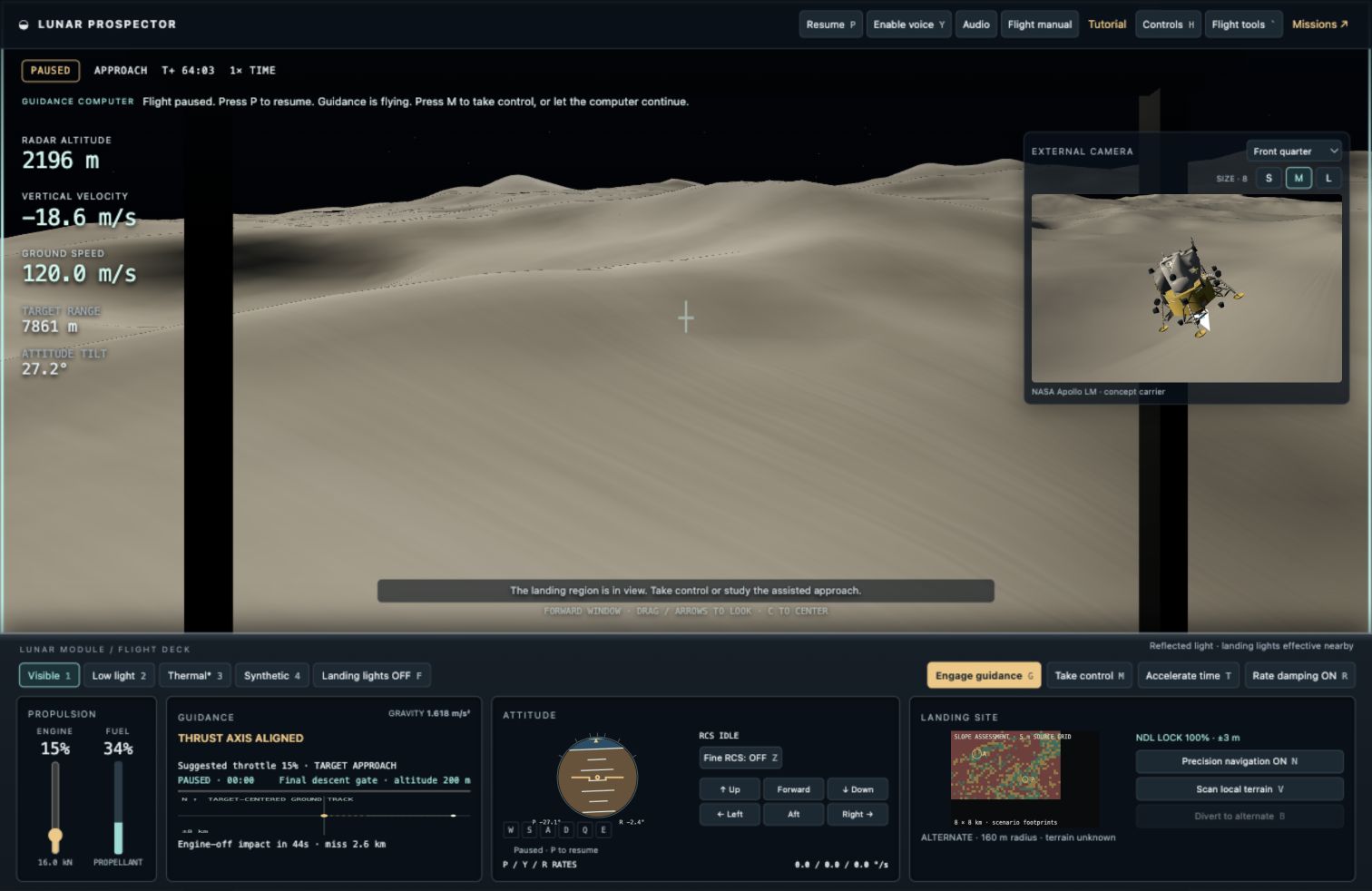
GenLab keeps building with AI. Lunar Sim started as an experiment — testing the latest AI models — and turned into something worth sharing: a free 3D simulator that flies you from lunar orbit down to the surface over real NASA terrain.
Follow the guidance computer or take manual control, and feel how hard landing on the Moon actually is. Built to help people learn about — and explore — the Moon.
Contact
We want to hear from founders building the rails of the orbital economy — and from institutions that think in decades.